The harmony, melodies and solos of So What inhabit a well-loved spot in the hearts of jazz listeners and musicians since the late 1950s.
In this jazz guitar lesson, you will learn about the structure, chords, scales, form and some ways to practice this song.
Hint: Practice along with the recording!
Moreover, you’ll focus on the musicality of this beautiful groove and expand your feeling for playing music in this wonderful tradition.
Welcome!
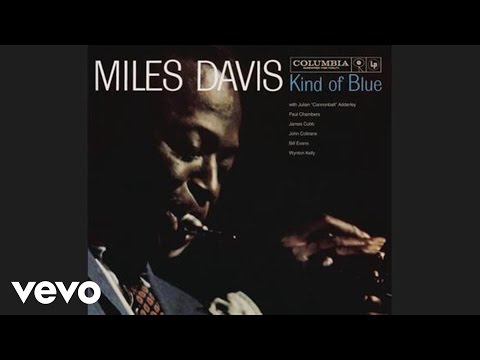
We’re going to get familiar with one the most well-loved cool jazz tunes – So What – from the classic Miles Davis album Kind of Blue.
Basically there’s some one chord (in 2 keys) and one minor scale (in 2 keys to learn.
For this lesson, I would suggest focusing on:
- Enjoying the learning process, while you’ll learn the basic concepts by reading this lesson, to actually really integrate them into one’s playing will be a lifelong process.
- Focus on the learning the structure of the song!
- Also, play along with the recording, both for enjoyment and while practicing!
- Focus on staying relaxed and grooving!
Note: This is the first official lesson of the Beginner Jazz Guitar Course on GuitarKitchen!
Questions? Ideas!
If you have any questions, comments, ideas and/or suggestions, please leave a comment and/or send me a message!
Table of Contents
Structure/Form
The main lesson today – learn about form of the song.
It’s AABA.
After the intro (0:00-0:31), the form (AABA) repeats through the rest of the song.
That means there’s an A section and a B section. The A section is played twice, then the B section is played once and finally the A section is played again.
AABA
Every section consists of 8 bars or measures. Each measure is 4 beats.
The entire form AABA is called “a chorus” or “the form”. The form continually cycles throughout the song.
After the intro, this form continues throughout the song.
The form (AABA) starts at about 0:33 on the recording.
Check it out!
So What Song Form
So check this out, this is the basic structure of the entire song So What:
- Intro – Played for a little over 30 seconds.
- Melody – played on bass – takes 1 chorus (AABA)
- Solos – Miles, Coltrane, Cannonball, Bill Evans
- Melody – played on bass – Paul Chambers, the bassist actually starts the melody on the 2nd A at the end of the song. But the AABA form continues throughout the song – in other words he doesn’t skip the first A when playing the melody.
- Ending – fading away while continuing to play melody.
| Song Part | Approximate Starting Time | Structure | # of Choruses |
| Intro | 0:00 | Intro Structure and chords | Intro form – not the AABA form of the rest of the song. |
| Melody | 0:32 | AABA | 1 chorus |
| Miles’ Solo | 1:32 | AABA | 2 choruses |
| Coltrane’s Solo | 3:25 | AABA | 2 choruses |
| Cannonball’s Solo | 5:16 | AABA | 2 choruses |
| Bill Evans’s Solo | 7:05 | AABA | 1 chorus |
| Vamp | 8:01 | AABA | Just the first A section |
| Melody | 8:14 | AABA | 2nd A, then BA – keeping the form |
| Outro | 8:58 | AABA (?) | The first 2 A sections of melody, fade out |
Except in the Intro (0:00-0:32), the entire song keeps the same form, AABA.
Here’s the AABA form broken down:
- A section – 8 bars – D minor
- A section – 8 bars – D minor
- B section – 8 bars – Eb minor
- A section – 8 bars – D minor
| Section | A | A | B | A |
| Chord | D minor | D minor | Eb Minor | D minor |
Why Learn Jazz Guitar from the Record?
Learning from the classic recordings (in any style of music) opens the student’s ears to amazing artistry of great musicians.
It’s (generally-speaking) a unique opportunity to learn directly from some of the most profound and impactful musical ideas and performances, as recorded and played by some of the greatest musicians who have lived throughout the eras of recorded music!
While there are many ways to learn music,
Learning from the greats via their recordings (and via sheet music for older music) presents an amazing (and challenging!) way to learn about:
Music, technique, composition, musicality, groove, etc, etc, etc!

Beginning Jazz Guitar Video Lesson, So What, Part 1
Scales for So What
The entire melody of So What fits in 2 major scales – the C Major Scale and Db Major Scale, or more accurately the D & Eb Dorian minor scale.
| Section | A | A | B | A |
| Chord | D minor | D minor | Eb Minor | D minor |
| Dorian Minor Scale | D Dorian | D Dorian | Eb Dorian | D Dorian |
| Corresponding Major Scale | C Major | C major | Db Major | C Major |
C & Db Major Scales
Major Scale Pattern Diagram for Guitar
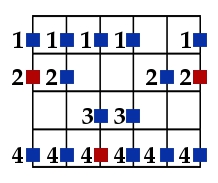
This is the form for the scale taught in the video today.
The red dot on the 6th string is at the 8th fret to play C major and at the 9th fret to play Db major.


D & Eb Dorian Minor
Dorian Minor Scale Pattern Diagram for Guitar
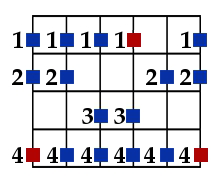
It’s the same form as the major scale diagram (shown above), but here’s the scale pattern that I was showing you in the video for D Dorian Minor and Eb Dorian Minor.
The red dot is the root of the scale.
For D Dorian Minor, the 4th finger would be at the 12th fret, 6th string. Eb Dorian Minor – 4th finger at 13th fret, 6th string.


Chords
Minor 7th
The root is on the 1st string, so D minor 7th would be on the 10th fret and Eb minor 7th would be on the 11th fret.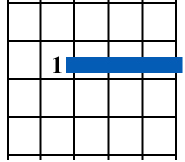
Minor 7th
Root is on 5th string. So D minor 7th would be on the 5th fret. And Eb minor 7th would be on the 6th fret.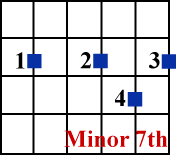
Minor 11th
Root is on 5th string. So D minor 7th would be on the 5th fret. And Eb minor 7th would be on the 6th fret.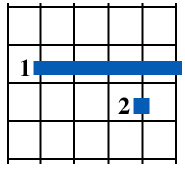

How to Practice Chords and the Dorian Scale with the So What Recording
Jazz Guitar Exercise #1 – Practicing the Chords with the Music
- Check out the video above – Beginning Jazz Guitar Video Lesson, So What, Part 1 – Exercise #1 starts at about (7:15)
- Pick one of the chord forms – the minor 11th or one of the minor 7th chords.
- Play the chord on ‘1’ of every other measure
- Keep the form (AABA)!
- So for the A Section play D minor, then for the B Section, play Eb minor.
- Work on playing through the song like this!
Exercise #2 – Learning the Dorian Scale with the Recording
- Now play the recording and pick out a few notes from the corresponding Dorian Scale – for now, just try to play a few notes from the Dorian Minor Scale Pattern Diagram for Guitar (found above).
- So for the A Section play D minor, then for the B Section, play Eb minor.
Exercise #3 – Ear Training – Pick out a few notes from the melody and Miles’ solo
Turn the recording back on. And just have fun picking out a few notes from the melody (0:32) and the solos (1:31) – especially Miles Davis’ solo!
Just remember:
- For the A Section play D minor, then for the B Section, play Eb minor.
Practice Makes Progress!
- Ideas for Learning to Play Jazz (Bebop, 2nd Line, Swing)
- How to Play Jazz Guitar (22 Beginner Lessons)
- Creating Diatonic Jazz Chords (and Melodies) from Major Scales
- Practicing Jazz Groove (Slow C Blues with Oscar & Count Basie)
- Better Groove – Six Fun Practice Ideas!
- Make your Own Backing Track (5 Minute Practice Ideas)
