1. “It Don’t Mean a Thing If It Ain’t Got That Swing!”
2. Jazz Guitarists – Please consider focusing on your right hand groove!
3. Practice Jazz Blues along with the Greats!
4. Practice Makes Progress!
5. All the best on your musical journeys!
Table of Contents
Groove!
A good part of the beauty of all music would be the groove.
Think of a style of music and how much the groove creates the mood of the music.
The body physically responds to good groove.
You relax, you tap your foot, you start to sway. It’s not exactly subconscious. You can restrain yourself from the feeling but in general it’s something that’s almost instinctual.

Balancing Body and Mind
It might be fair to say some people have been caught up in internationalization trends in jazz. Beautiful music comes all parts of the worlds!
While we jazz guitarists love thinking about complex melodies and harmonic substitutions please remember to think/feel just as much (even more?) about the groove.
In fact, just like we would all love to internalize complex harmonic movements and rhythmic patterns, consider focusing on internalizing the groove.
In the case of classic jazz, groove is swing. And the basis on that jazz groove is the quarter note pulse with accents on 2 & 4!
You can practice feeling the groove in music.
Musical Grooves in the World Today
Most of the time we don’t think about groove because it’s part of a larger cultural event. For example, we go to the club, maybe they are playing hip hop, everyone knows the words and at least sort of how to dance it.
Most musicians (myself included) who are interested in playing jazz, may want to consider spending some time focusing on that old-school, beautiful swing groove!
When was the last time you went anywhere that people were at a club, dancing to jazz, singing the lyrics? Maybe if you had a time machine.
Checkout a Classic Uptempo Jazz Blues!
Here’s some simple ideas to expand your sense of classic swung jazz.
Who better than checking out Ray Brown, Oscar Peterson, and Ed Thigpen?

Here’s the track (thanks YouTube). Try doing these exercises (preferably for the entire song):
For rhythm guitar
- With the strings muted, lock in with the hihat on 2 and 4
- Tap your finger against the guitar like Ray Brown does against the bass
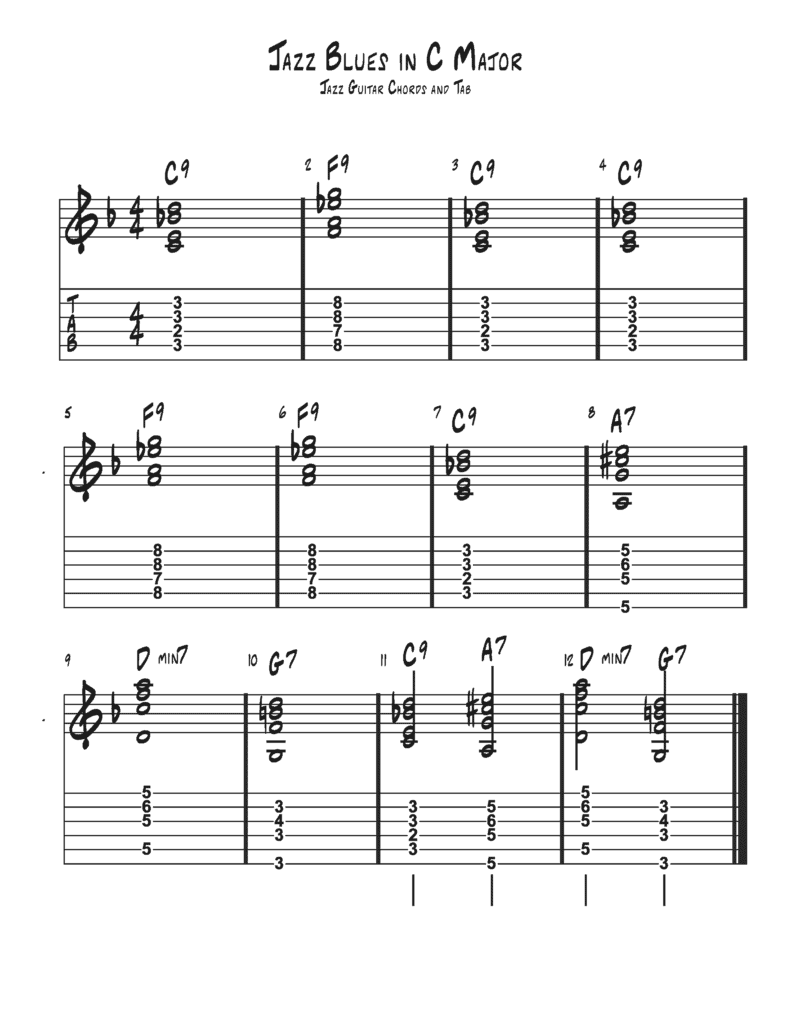
- Play quarter note comping of the changes (blues in C) – try to lock in with the drums and specifically the hihat.
For soloing
- Keep time with your strings muted. Play muted quarter notes on one string at a time. This will help you lock into the time both physically and mentally.
- Repeat #1 while you play slightly more complicated rhythms. Maybe add a few 1/8 notes. Remember to lock into the time, especially the drums.
- Try to play along with the melodies and solos
- Play your only solos over the entire song
Hope that helps!! I think it will!

C Jazz Blues Chord Chart/Changes
Practice Makes Progress!
A friendly reminder:
Practice Slow and Relaxed,
Learn Fast

Articles of Interest
- Practicing Jazz Groove (Slow C Blues with Oscar & Count Basie)
- 30 Lessons in Jazz Guitar (Beginners, Fundamentals, Overview)
- Great music by Oscar Peterson and Count Basie
- Blues in Jazz
- Ideas for Learning to Play Jazz (Bebop, 2nd Line, Swing)
- Learning to Groove with the New Birth Brass Band!
- Improve Solos – Right Hand Groove (Jazz Guitar version)
- Jazz Guitar Ideas – How to Improve Time (and Groove) for Jazz Guitar – Count Out Loud!